Slow Motion Images of a Nikon F Shutter in Action
January 12, 2024
Tags: Film Photography, Photography

For a while, I’ve been meaning to attempt a slow-motion video of the shutter action on one of my Nikon F camera bodies. I finally got around to it today.
Part of my inspiration was this video by the rather enthusiastic man behind the SmarterEveryDay YouTube channel. In that video, he explores how 1930s-era camera technicians tested the shutter speeds of film cameras using a mechanical stroboscope. It’s a fascinating video that I encourage anyone with an interest in this kind of thing to watch.
Although an old stroboscope is not part of my camera gear collection and likely will never be, watching that video made me interested in seeing how well my Canon EOS M200 could capture my Nikon F’s shutter action in slow motion.
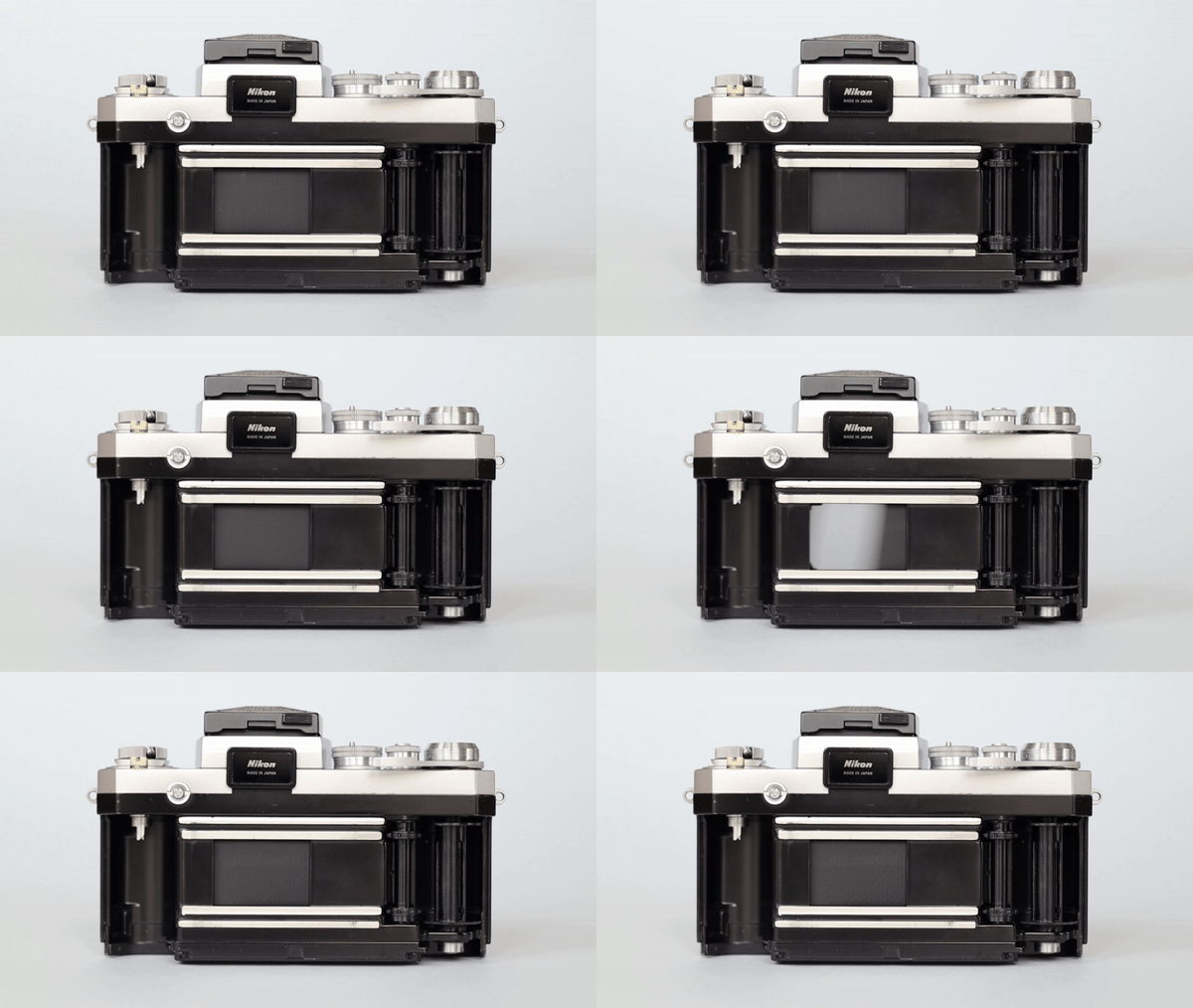
With my M200 fitted with an adapted Nikkor 50mm f/2 lens set to a nice and fast aperture of f/2.8, I took a slow-motion video of the backside of my Questar-modified Nikon F. I set the shutter speed to 1/250 sec. and used the camera’s self-timer to fire the shutter.
Here’s that slow-motion video slowed further to 0.1x speed and converted to a looping animated GIF:
And for good measure, here is the front side of the same camera but with the shutter speed set to a much slower 1/15 sec., again as a looping animated GIF:
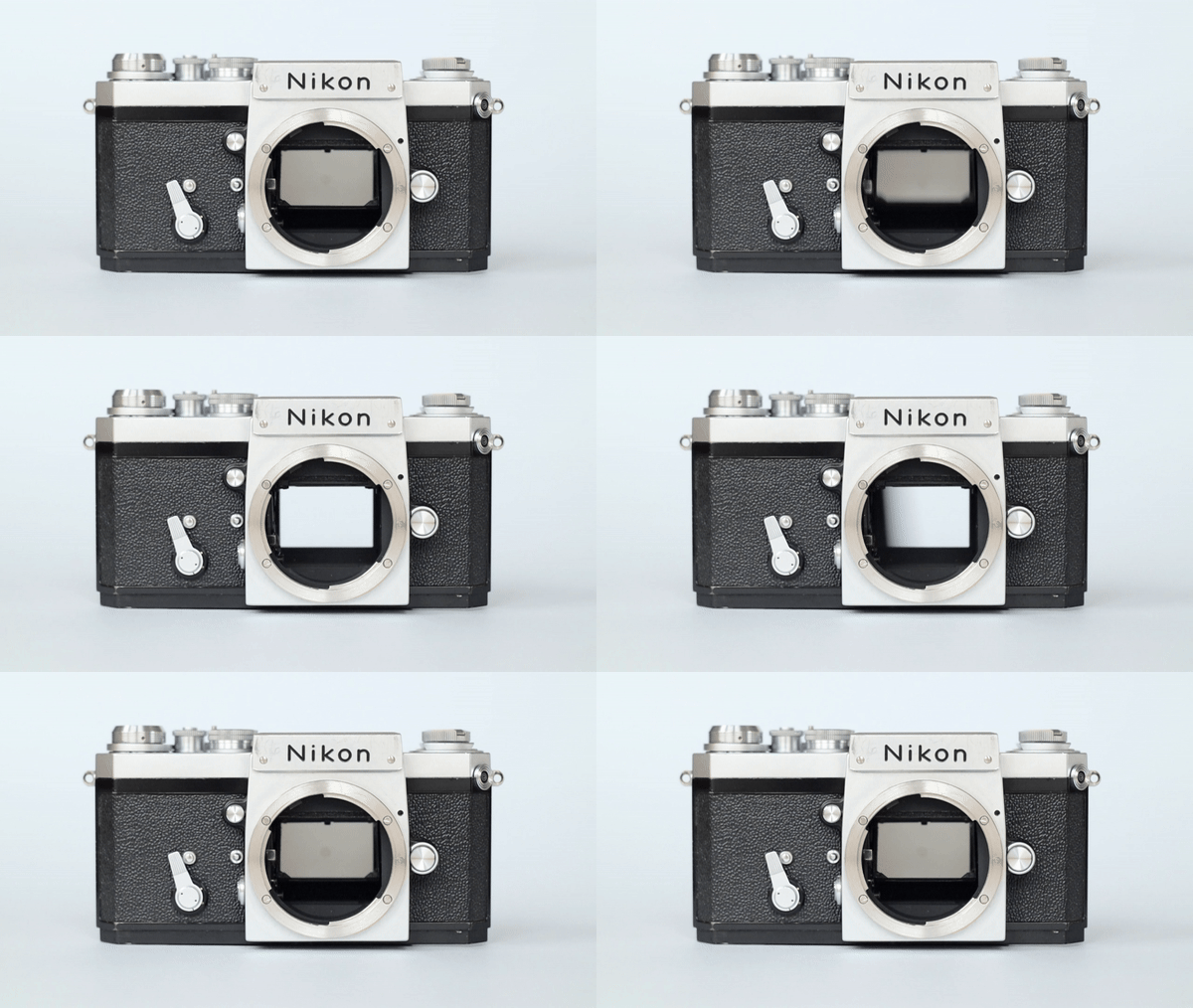
In addition to the movement of the shutter curtains, two other things are visible in that second slow-motion image.
First, when the Nikon F was introduced in 1959, part of what made it such a big deal was its fully automatic reflex mirror. Most older SLR models had mirrors that remained up after an exposure. As a result, the viewfinder image blacks out the moment one presses the shutter release button. My Praktina FX is one such camera. When I use it, I have to cock the shutter to get the mirror to return to its downward position. Through the viewfinder of the Nikon F, however, one sees only a momentary flutter as the reflex mirror flips up for a split second. After an exposure is captured on film, the mirror returns to its downward position.
Another big advantage of the Nikon F was its fully automatic lens aperture. Older camera models had crude aperture mechanisms that were clumsy to use. With the Nikon F, however, one could focus with the lens wide open without having to remember to stop it down or work a separate semi-automatic lever before making an exposure. The camera body takes care of stopping down the lens and opening it back up. In the above animated GIF, the action of the arm that makes contact with the lens’s aperture mechanism is on display on the left side of the lens mount throat.
All of these actions—reflex mirror, aperture arm, and shutter curtains all moving in wonderful concert with each other—happen in a blink of an eye. Feeling and hearing the precise mechanical action of the camera in my hand and knowing that there are zero electronics involved is definitely part of the satisfying and very tactile experience of doing film photography. Seeing that action in slow motion is also a source of joy. It comes close to inducing a bit of film camera hypnosis.