Fire Dancers on Black and White Film
June 21, 2026
Tags: Local Events, Photography

A few weeks ago, I wrote about how I digitally shot a local gathering of fire dancers on my Canon EOS R8 mirrorless camera. I also photographed that same group on black and white film. As I did with my digital camera in hand, I used a slow shutter speed setting of 1/2 second to represent the blurred motion of the fire dancers.
The experience certainly underscored how much easier digital photography can be. Technology has progressed so much that setting a camera to shutter priority mode and just shooting away can get one a number of rather impressive images. To be sure, it did take a bit of experience and skill to know what shutter speed to use in this case. But even when I used fully automated program mode to shoot these kinds of events last year, my Canon EOS R8 did an admirable job. It’s almost as if the camera could read my mind in terms what my creative intent was.
In comparison with making hundreds of digital exposures, culling out the overwhelming majority of them, and isolating the handful that I wanted to put postproduction editing work into, the act of shooting film was a bit jarring. Compared to the digital experience of firing the shutter button with abandon and not even coming close to filling my SD card, I had a finite amount of film to work with: one full roll of Kentmere Pan 400 and a roll and a half of Ilford FP4 Plus over two sessions. I found myself patiently waiting for the kind of composition that I found most pleasing in my digital images. Even then, the chances that I would get a decent shot were slim since the dancers were constantly in motion. My success rate was about one in twenty.
I also couldn’t be lazy and rely upon autofocus. I deliberately chose my fastest Nikkor lens, my trusty 50mm f/1.4, so that I could benefit from its brightness and shallow depth of field when focusing in a dark nighttime setting. I couldn’t afford to waste time finding precise focus; close enough was good enough.
I’ll let my photos speak for themselves:
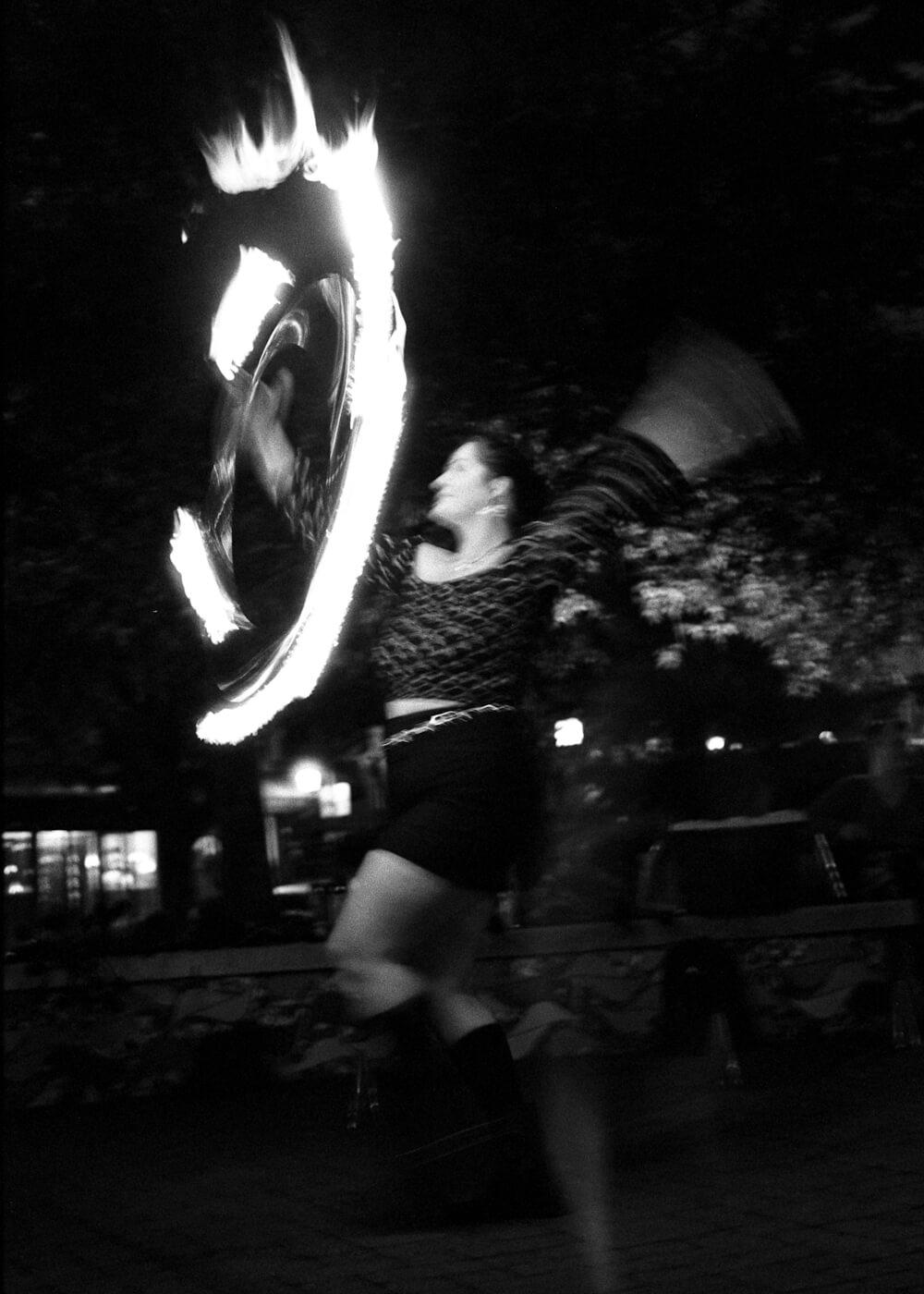
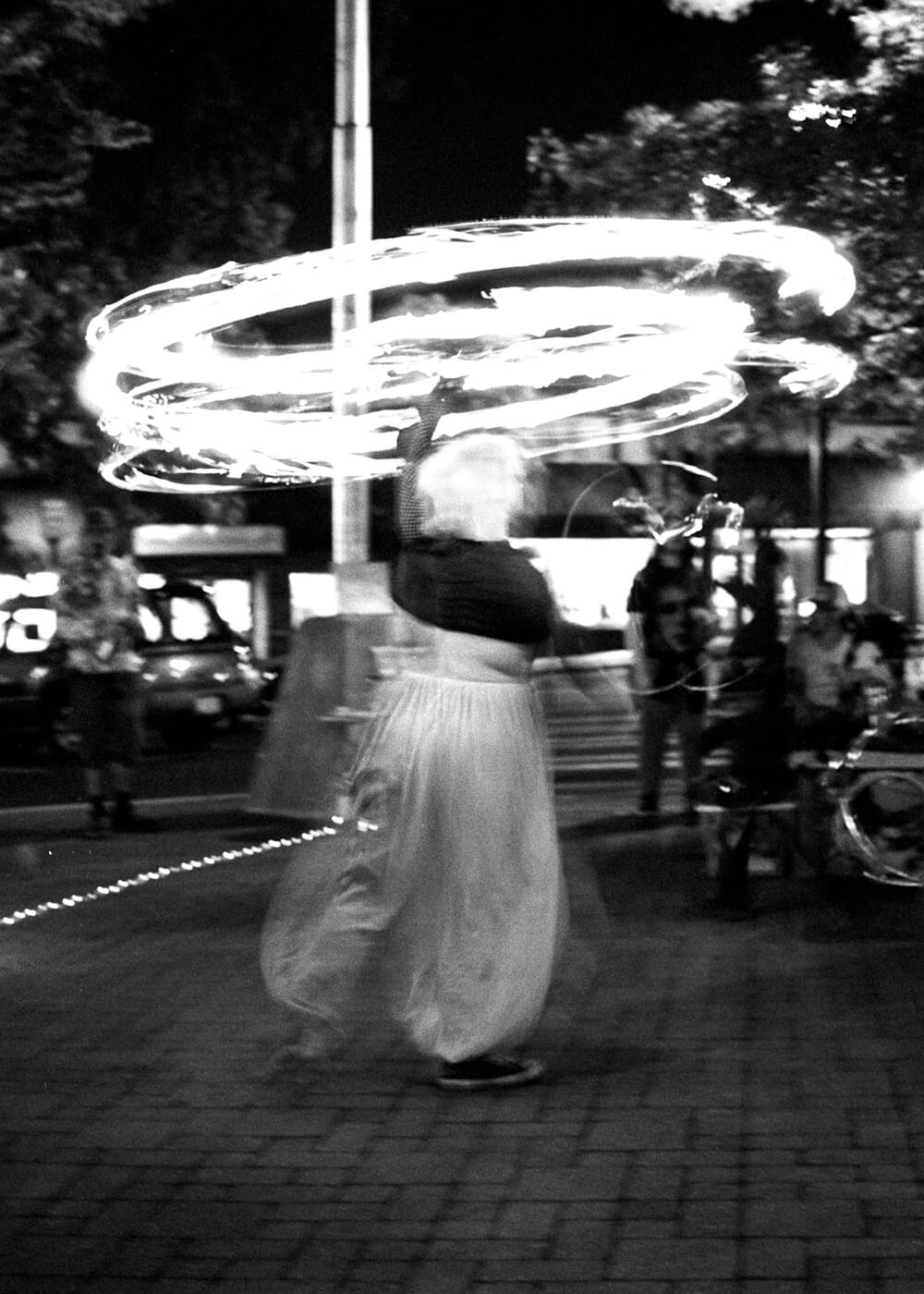
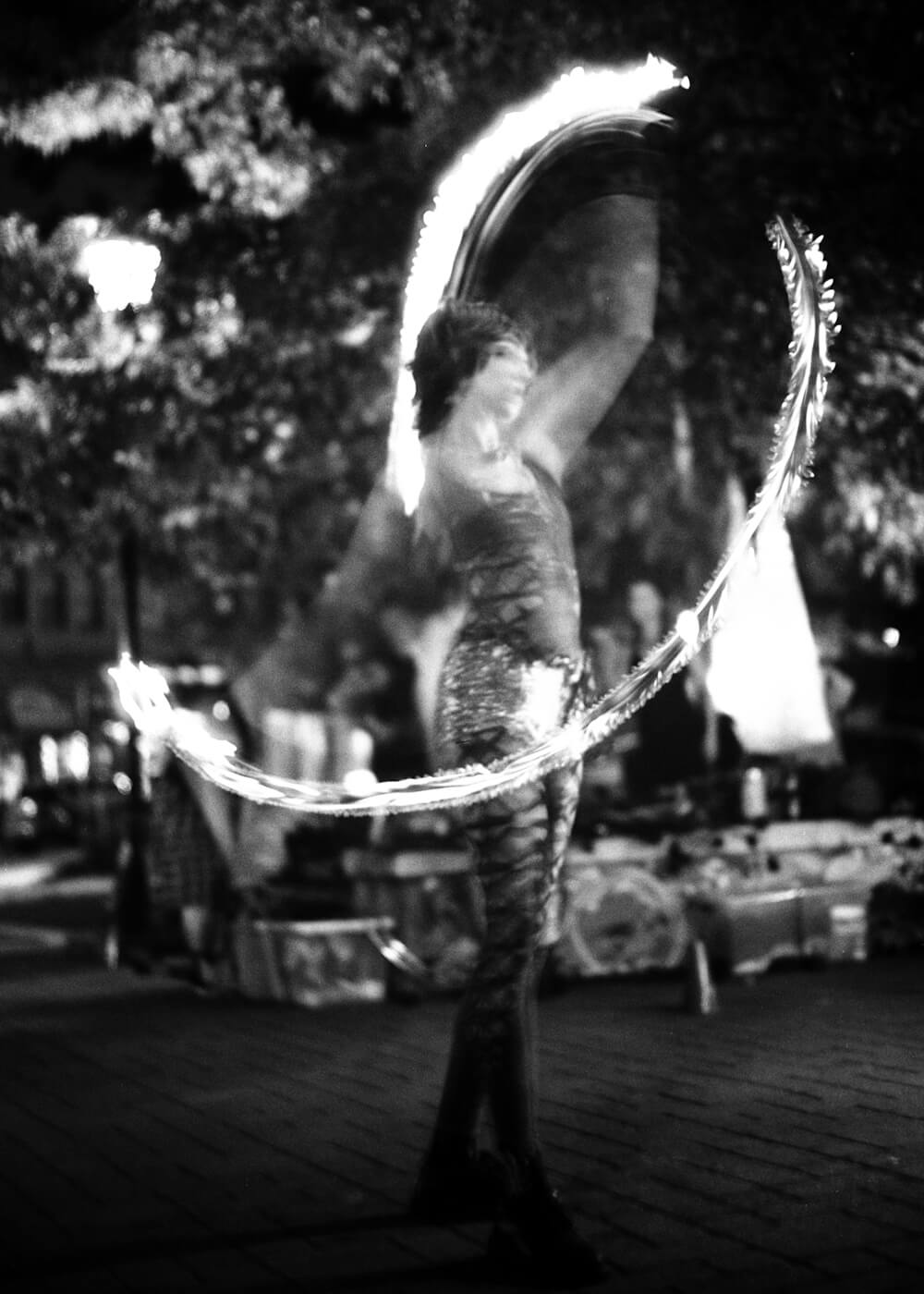
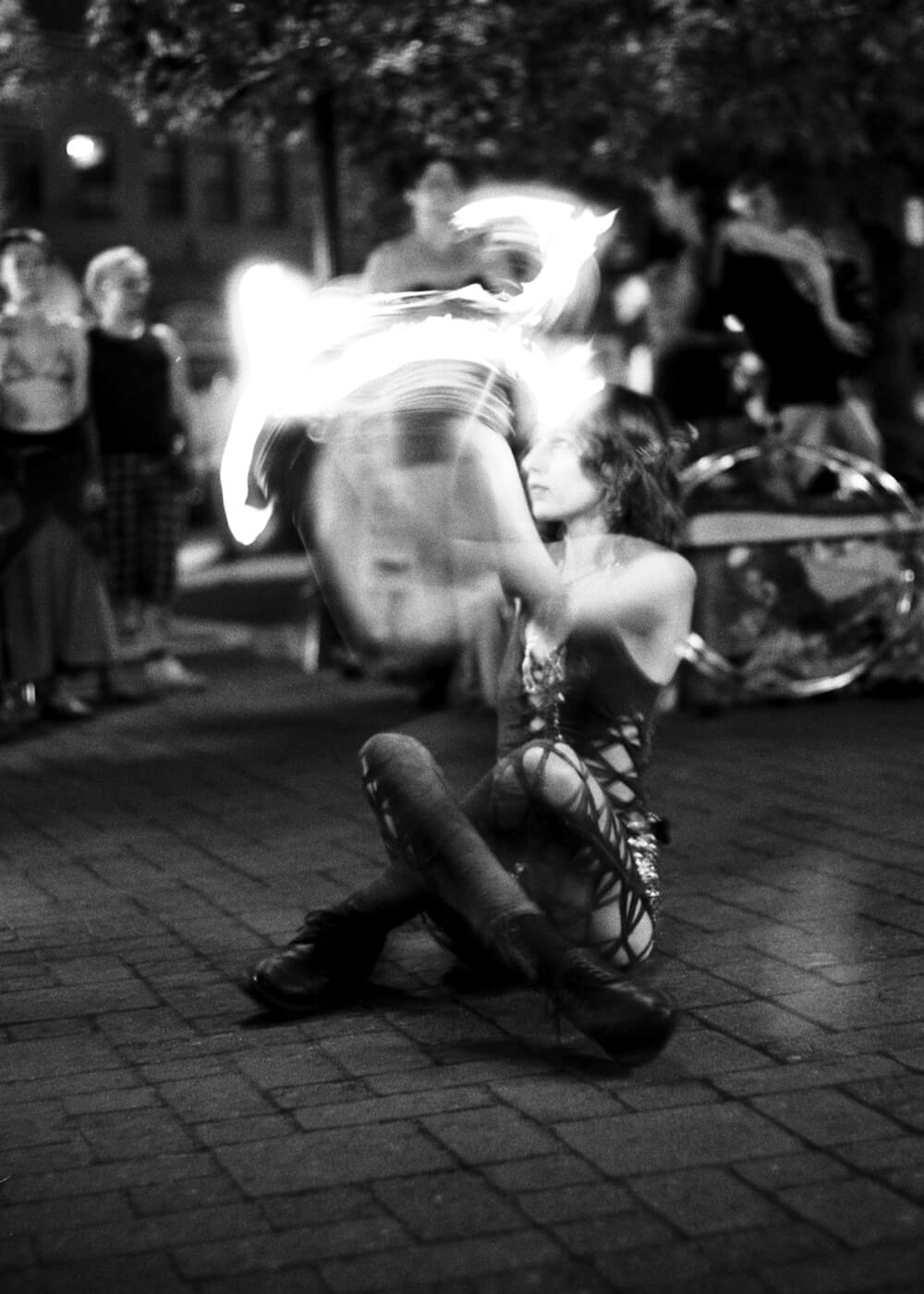
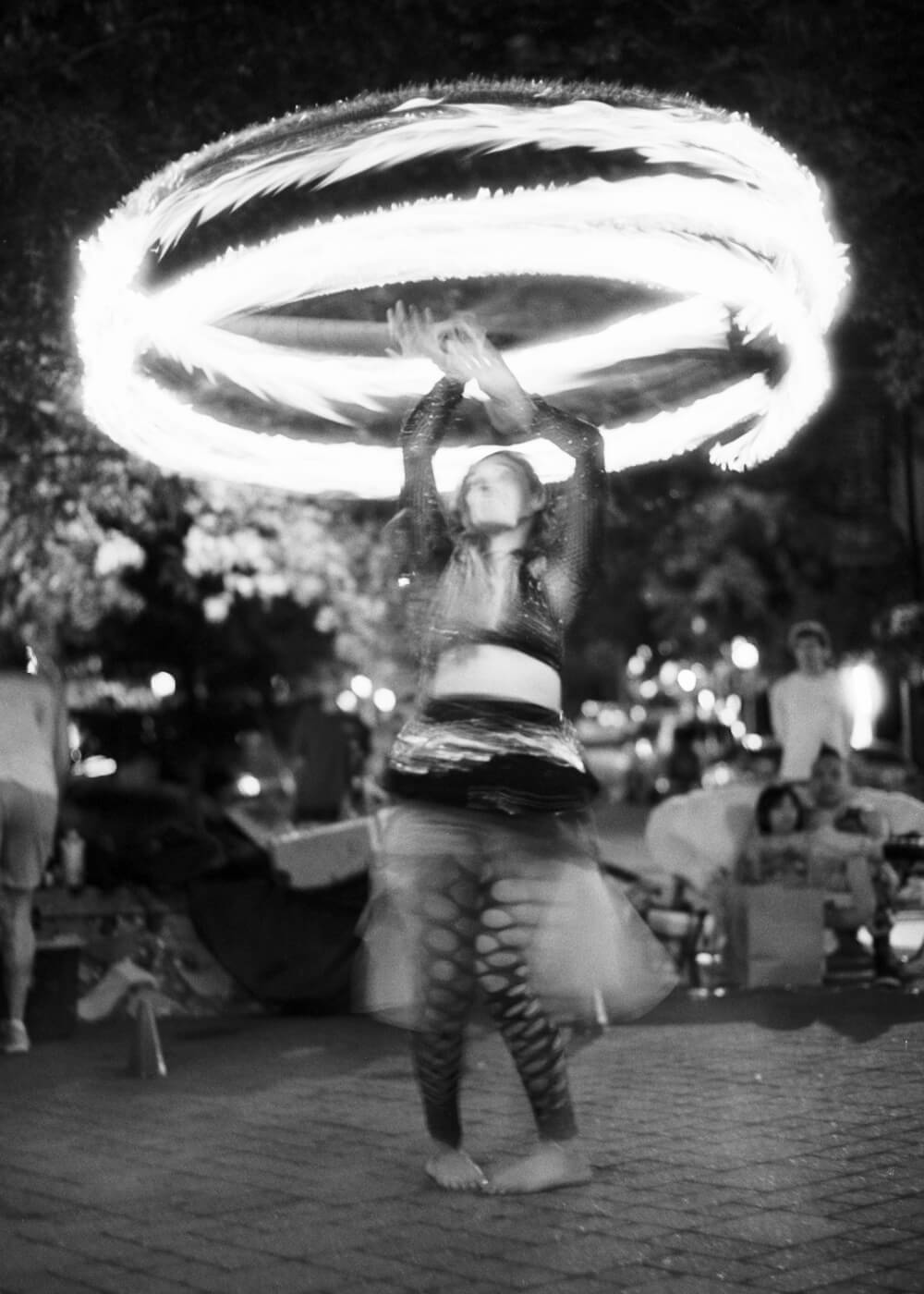
Are my digital images better than my film ones? In certain respects, yes. I love the way that the fire casts a warm glow of orange light on my subjects. It was also easier to emphasize that warm glow by darkening my background via manipulation of black point, midtones, and contrast settings in postproduction.
Yet in other respects, I love the gritty look that my film photos have. As was the case when I had a digital camera in hand, sharpness was not a concern since the whole point of shooting a slow shutter speed was to represent motion through blur. My film photos have a classic softness that I find rather appealing.
My digital and film images aren’t better or worse over the other. They simply offer different yet equally appealing aesthetics.