I Did Not Buy a Leica, Part Two
October 2, 2025
Tags: Photography, Film Photography, Camera Gear, Travel

In my last post, I wrote about a recent experience visiting the Leica Store in San Francisco. Long story short, I came very close to purchasing a beautiful Leica IIIc and 50mm f/2 Summitar lens. In spite of my curiosity about it, I knew deep down that it wasn’t for me.
One of the first things I do when I pick up an unfamiliar camera is to bring it up to my eye. Especially considering that I’m an eyeglasses wearer, viewfinder comfort is a top concern. That’s one of the reasons why I am such a fan of the Nikon F.
Barnack Leicas are another matter, however. The handful of experiences I have had with handling them have all taught me that those tiny twin rangefinder and viewfinder ports are simply too small for me. It wouldn’t be a problem if I didn’t wear glasses. But with spectacles on, they have eye relief that is far too short.
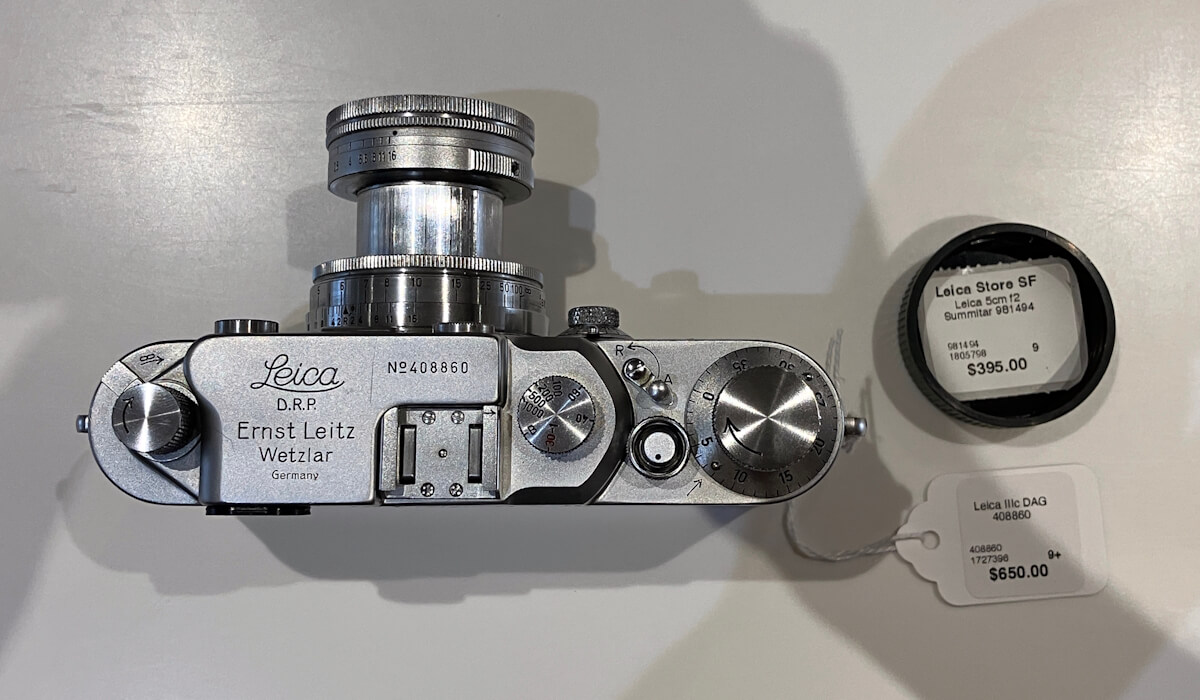
During that San Francisco Leica Store visit, the logical part of my brain somehow got turned off. For a short period, the aura that surrounds Leica cameras almost got the better of me. I very much admire precision gadgetry especially when it’s mechanical and when it’s been recently serviced. That particular Leica IIIc camera body managed to be all of those things.
Ultimately, my wife and I drove away from San Francisco without that Leica IIIc and 50mm f/2 Summitar lens in the car with us. And I know I’m better off for it.
What really drove that home to me was my more recent experience with a Voigtlander Vito II folding 35mm camera that I received as a gift.

When I got it this summer, my assumption was that the camera wasn’t operable. It was quite dirty from years of handling. Perhaps this thing was destined to be listed on eBay for sale as a parts donor or as a repair candidate. Not long after receiving it, I set the Vito II aside and carried on with other things.
A few weeks ago, however, I thought to myself that I really ought to try it out. After quick surface cleaning, I realized that this all-mechanical example of mid-1950s photographic technology might just work.
After having shot two rolls of film through it, I found that it indeed did work... for the most part. Unfortunately, there were a few regions on both rolls where light had penetrated through to the film. I have my suspicions: the leather bellows are a bit crusty, and aging light seals probably aren’t doing their job to the extent they used to.
But the most part, my images came out just fine.
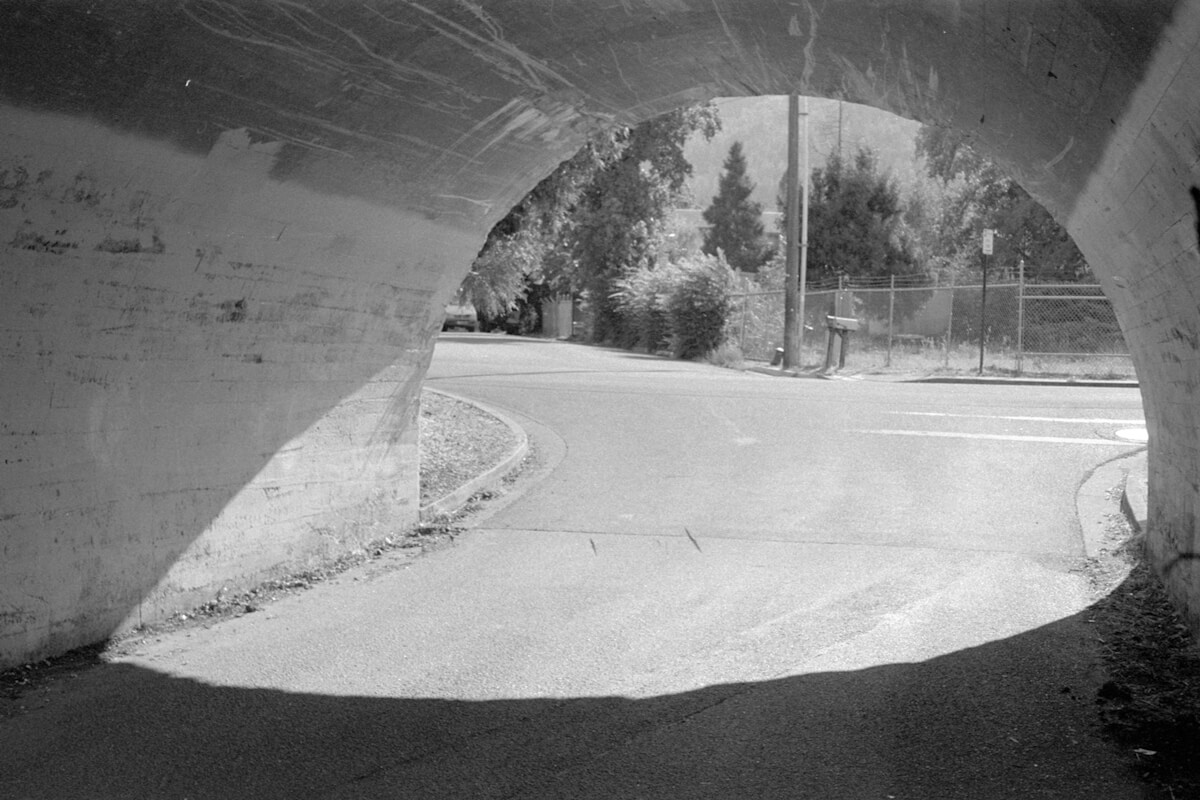



Others like Mike Eckman have written about the Vito II, and I’ll let him and other reviewers do the talking about what it’s like to use the Voigtlander Vito II. In a nutshell, working the camers’s separate film advance and shutter cocking actions was a rather novel experience. I liked how compact the Vito II is. And the street photographer in me loves how quietly its shutter operates.
But that teeny tiny viewfinder...
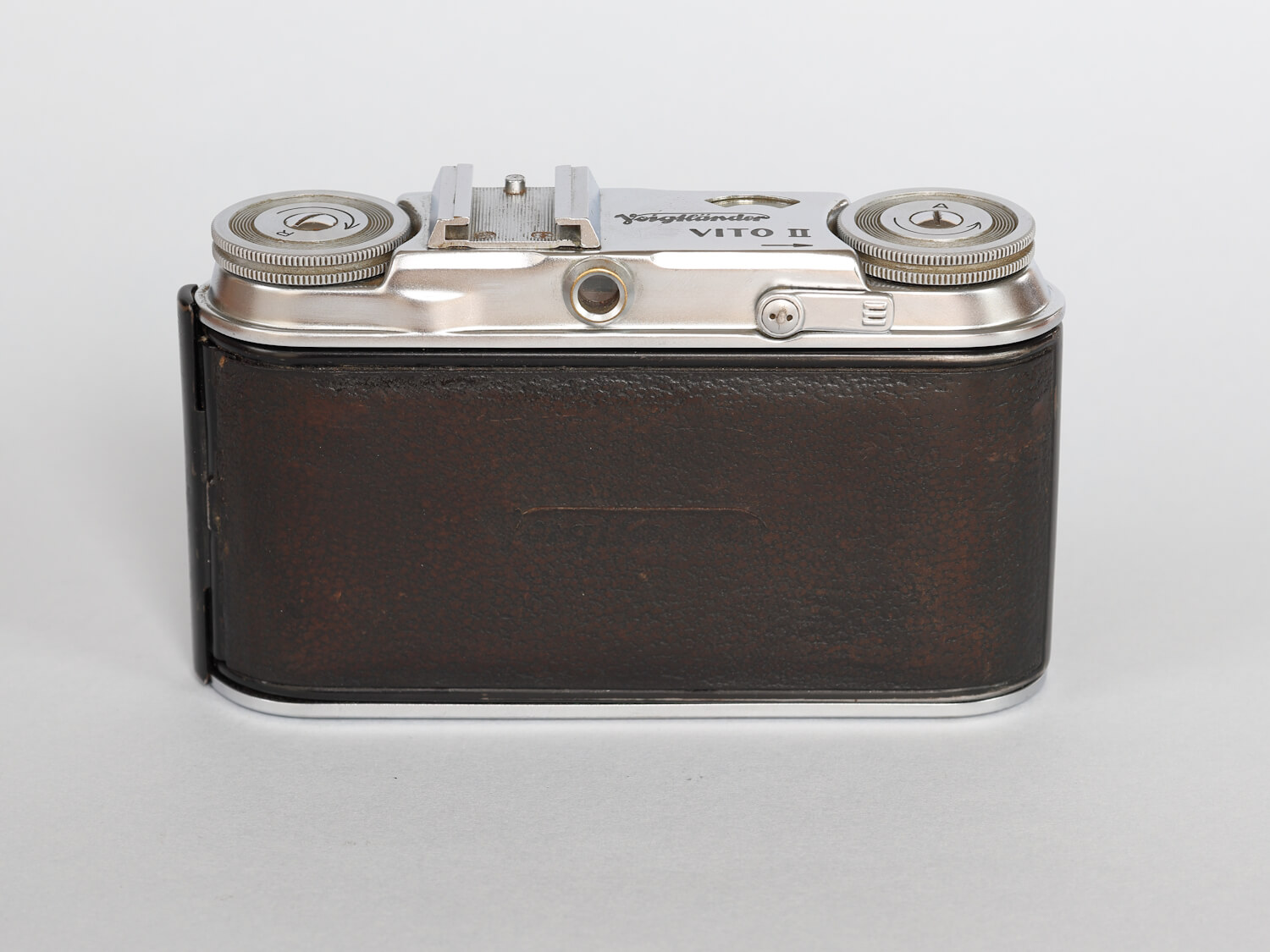
Strolling around town with my new (to me) Voigtlander Vito II, perhaps the biggest problem I encountered was how tight its viewfinder eye relief is. It was by far the least enjoyable part of the shooting experience.
This was my first time using a camera with super-tight viewfinder eye relief. And I didn’t love it. It didn’t take me long to tie that experience in with my earlier temptation with the Leica IIIc at the San Francisco Leica Store. I soon realized how ticked off I would have been with myself for plowing over a thousand dollars into a Leica camera whose viewfinder eye relief wasn’t all that much more forgiving.
My concerns didn’t stop there. In recent months, I have been drawn more and more to using short telephoto lenses for my street photography. I love the way I can frame my subjects tightly and eliminate distracting elements. The see-what-you-will-get way that SLRs work lend themselves very well to these kinds of applications. Rangefinders with telephoto lenses, on the other hand, require either viewfinders whose frame lines are adjustable (like the Nikon SP) or auxiliary viewfinders.
Putting substantial money into a camera and lens combo that doesn’t suit my current style of shooting would have been a rather foolish investment for me to have made, in other words. Sometimes the aura of a brand isn’t really worth it in the end.
The comparison between the Voigtlander Vito II and the Leica IIIc with 50mm lens isn’t quite fair. The former is missing a rangefinder, after all. Although it wasn’t impossible, achieving focus using the Vito II’s zone focusing scale was more a matter of guesswork than one of precision. It helped to keep my focal ratios at f/8 or higher.
Unfair comparisons aside, my Vito II’s fixed 50mm f/3.5 lens and its really tight viewfinder gave me a little taste of what it would have been like to use the Leica IIIc and 50mm f/2 Summitar lens that I seriously considered buying a matter of weeks ago. It also underscored how much of a leap forward SLRs like the Nikon F were. Using comparatively antiquated camera technology put the beautiful design and brilliant execution that my Nikon F demonstrates in high relief.
Yep, I am a confirmed Nikon F enthusiast. In spite of how neat it would have been to acquire a Leica III, I think that sense of novelty would have worn off fairly quickly for me once I actually started to use it.